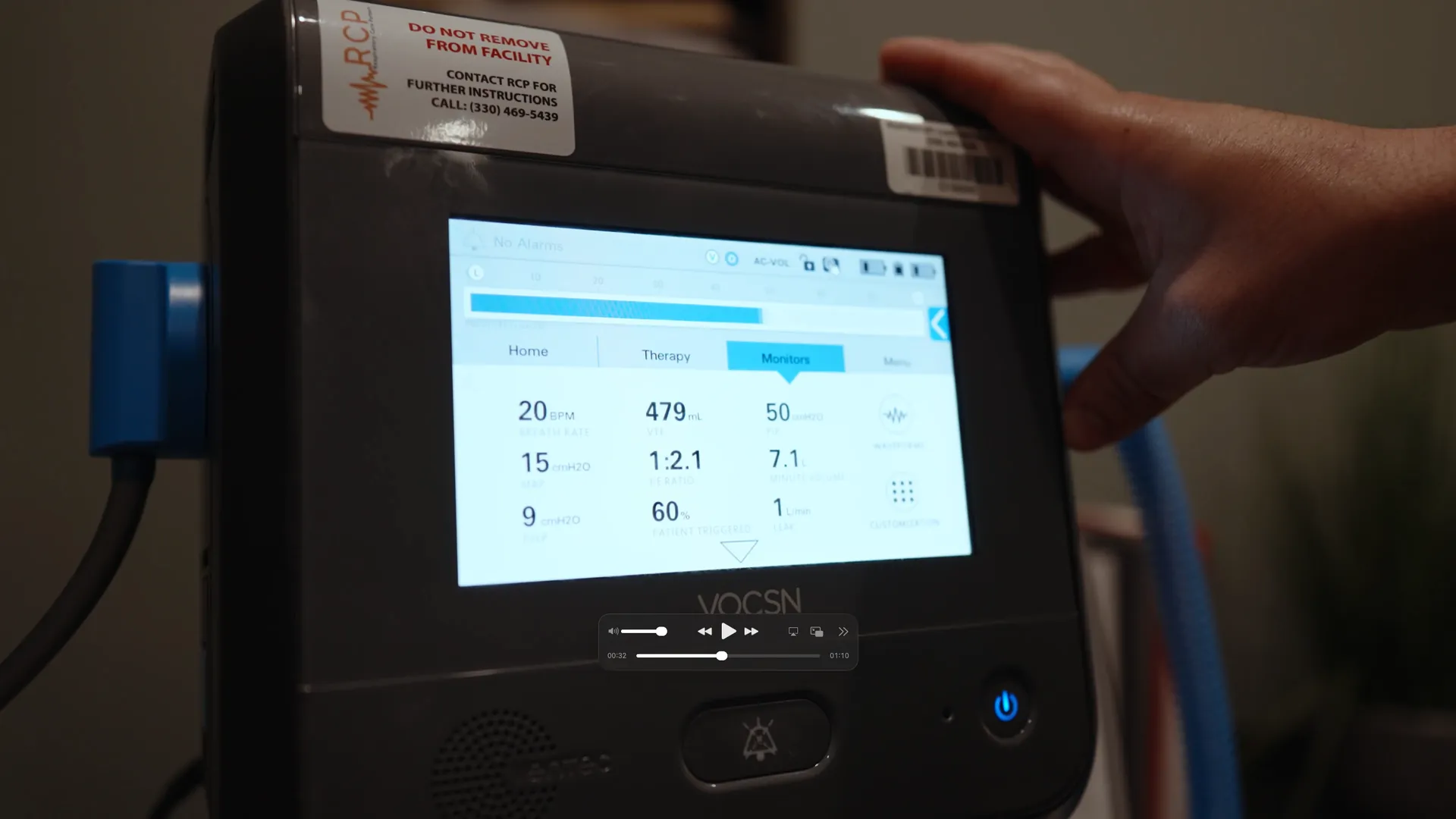
When you ask a community, “Do you offer respiratory care?” — the answer often sounds the same. The reality is not.
If you're choosing where your parent goes next, the most important detail isn't on the brochure. It's the answer to a follow-up question: who is here at 2 a.m. when something changes?
In practice, communities that advertise respiratory support may actually offer:
- On-call coverage only (a therapist called in when needed)
- Coverage shared between multiple buildings
- Scheduled visits a few times a day
That model creates gaps — and gaps are where breathing problems become emergencies.
What true 24/7 respiratory care looks like
- A respiratory therapist is on-site at all times
- Changes in condition are addressed immediately, not at the next visit
- Treatments and ventilator adjustments happen in real time
- Residents are continuously monitored for stability
Why it matters for your family
This level of care meaningfully reduces emergency room visits, hospital readmissions, and delays in treatment. It also creates a steadier day for the resident — fewer crises, more energy for the things that matter.
For families, that consistency is the real benefit. Knowing care isn't just available, but always present, is the difference between sleeping through the night and not. In the next post in this series, we'll walk through the questions to ask any respiratory care community before you decide.