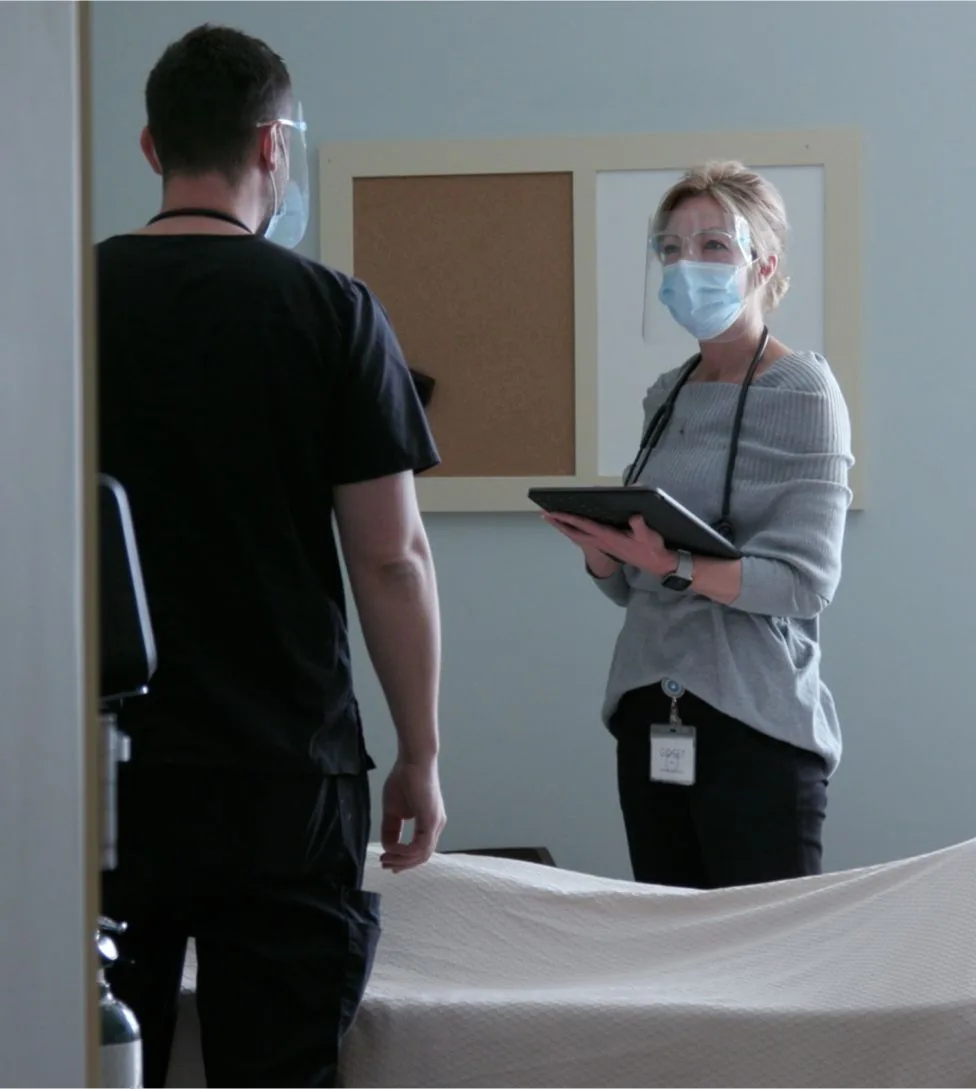
This week is Respiratory Care Week, and at Ohman Family Living at Briar in Middlefield, Ohio, it is a chance to show what respiratory therapy looks like every day. Our respiratory therapists are on site around the clock, not on call, and they provide post-acute care for patients who depend on ventilators, tracheostomies, and other breathing support. Here is how that care works and why it matters for patients and the families who rely on us.
What is Respiratory Care Week?
Respiratory Care Week recognizes the respiratory therapists and clinicians who keep people breathing. For patients with complex lung conditions, those professionals are often the difference between a stable recovery and a setback. At Briar, our respiratory team works alongside nursing, physicians, and families every day to protect the progress patients make. For a closer look at one member of our team, read More Than Respiratory Care: The Heart Behind Every Breath.
What does 24/7 respiratory therapy look like at Briar?
Many facilities rely on on-call coverage for respiratory needs. At Briar, respiratory therapists are on site 24 hours a day, seven days a week. That means a patient's breathing support is monitored and adjusted by people who know the patient, without waiting for someone to arrive.
We also have a pulmonologist who visits five days a week and cares for our respiratory patients directly. On site, we draw arterial blood gases (ABGs) so clinical decisions can be made quickly. Our team leader, Alex Mostoller, RRT, RPSGT, Director of Respiratory Therapy, oversees this work and serves as a clinical liaison for hospital partners.
Ventilator care and weaning without starting over
A transfer from the hospital to a post-acute care setting is a high-risk moment for patients on breathing support. Equipment changes, new protocols, and unfamiliar staff can all interrupt care that took days or weeks to stabilize.
Briar is built to prevent that disruption:
- Bedside evaluation before transfer. A Briar respiratory therapist assesses the patient at the bedside before the move, so the care plan is understood from the start.
- A single ventilator transition. Patients are not switched to different equipment on arrival, which keeps settings and routines consistent.
- Ongoing ventilator weaning and trach management. Our team manages tracheostomies, ventilator weaning, and related respiratory needs as part of everyday post-acute care.
What should families and referral partners know?
If you are a family member, you do not need to understand every clinical detail to ask good questions. Ask who is responsible for breathing support at night, how often a respiratory therapist checks on your loved one, and how the team communicates with you. At Briar, those answers are straightforward: respiratory therapists are on site around the clock, and our team keeps families informed. You can learn more about what to expect on our families page.
If you are a hospital discharge planner or case manager, our team can review a patient's current respiratory needs and discuss whether Briar is a good fit. Contact us at (330) 984-1418 or Amostoller@ohmanfamilyliving.com.